DETT TexPro
Choosing bedding by season is less about buying a new set every few months and more about adjusting warmth, breathability, and layers. A lightweight cotton sheet may feel crisp on a humid July night, while a breathable wool or down alternative comforter can add warmth when winter air settles in. Small changes matter.
Sleep expert Dr. Michael Breus notes, “The best temperature for sleep is between 65 and 68 degrees Fahrenheit.” That guideline can help, but comfort depends on your room, sleepwear, and personal needs. There is no single bedding combination that suits every sleeper. A warm apartment in January may call for less insulation than a drafty bedroom in October.
This guide explains how to choose bedding for different seasons, from cooling fabrics and airy weaves to insulating layers that still let moisture escape. It also considers mattress protectors, duvet weights, and easy-care materials, since comfort is only useful if bedding fits your routine. A high thread count alone does not guarantee a cooler or softer night. I used to treat it as a shortcut; it isn’t.
You will find practical ways to adjust bedding without replacing everything. Try a light blanket at the foot of the bed before investing in a heavier comforter. Notice how the room feels at bedtime and in the morning. Your preferences may shift, too. That is worth revisiting.
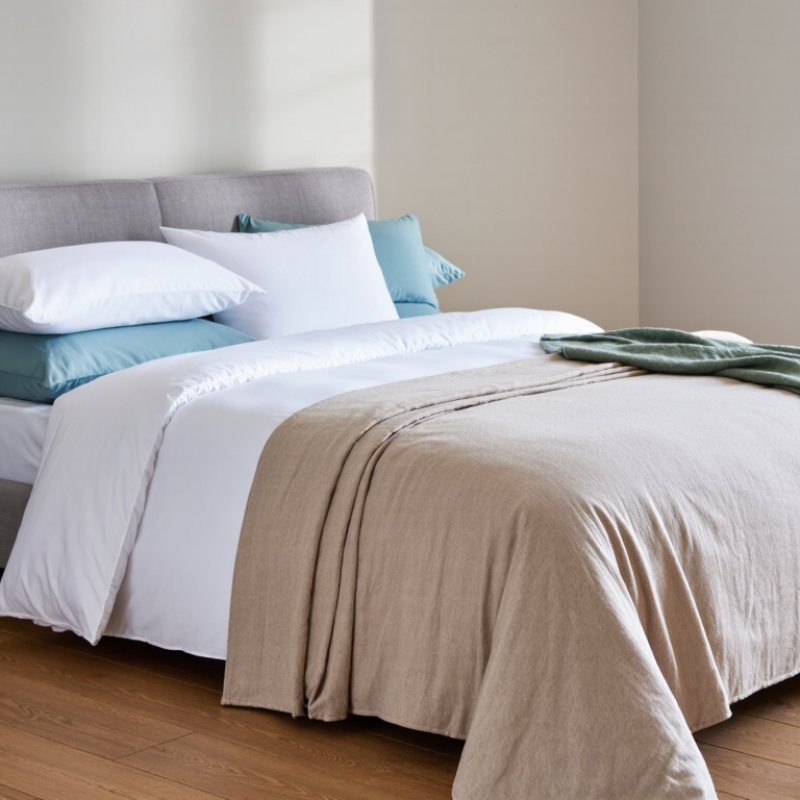
A duvet’s TOG rating describes insulation, not a guaranteed sleep temperature. For warm summer nights, 4.5 TOG is a useful starting point. It can feel comfortable in a well-ventilated room, especially with a light cotton cover. But a humid bedroom may still feel sticky, even under a low-TOG duvet.
In colder months, 10.5 TOG often suits a moderately heated home. If your bedroom stays chilly, 13.5 TOG may provide more warmth. Choose based on the room, your sleepwear, and whether you tend to feel cold. A cool room near a drafty window can feel very different from a heated one. Feel cold? Add a layer. Too warm? Adjust.
I’ve found that bedding feels different after midnight, when the room temperature drops. A spare thin blanket can help without making the bed heavy all night. TOG labels are helpful, but they cannot account for every sleeper or home. Check how you feel for a few nights, then change one layer at a time. My own first guess is not always right.
13–18% Wool can regain roughly 13–18% of its dry weight in moisture vapor; cotton is commonly listed at about 8.5%. These figures describe moisture regain, not how quickly a sheet moves liquid sweat away from skin. Textile testing distinguishes standard conditioning from commercial regain allowances: ISO 139 specifies textile conditioning atmospheres, while ASTM D1909 lists commercial regain values. Test method and humidity matter. That sounds decisive, but it isn’t.
In a cool bedroom, wool’s higher vapor absorption can help buffer small humidity changes beneath a duvet. Cotton usually absorbs less vapor, yet its weave and fabric weight strongly affect how it feels. A crisp, lightweight cotton percale may feel cooler than a dense cotton sateen. Neither fiber guarantees comfort on its own. I’d compare the finished fabric, not just the fiber label, and treat regain figures as a useful clue rather than a performance promise.
Tips: Choose breathable, lighter bedding for warm months; add a wool layer when nights turn cool. Check care instructions and room humidity, too. Numbers help. Touch matters. A slightly imperfect fit between bedding and sleeper can outweigh the lab data.
Choosing bedding by season is easier when “breathable” has a measurable meaning. EN ISO 11092 tests fabric samples on a controlled sweating guarded hotplate. It reports thermal resistance, Rct, and water-vapour resistance, Ret. Lower Ret generally means water vapour passes through the tested material more readily. Higher Rct indicates greater resistance to heat flow. Two different clues.
For a warm bedroom, compare fabrics with lower Ret, then consider lightweight construction. For colder months, a higher Rct sheet or layered cover may help retain warmth. But don’t read either figure as a comfort guarantee. The test uses a fabric specimen, not a finished bed with seams, trapped air, a mattress, and a sleeper moving under covers. A crisp label cannot capture all that.
Check that results come from comparable test conditions, and ask whether they describe one layer or a fabric assembly. A smooth swatch may feel cool in your hand, yet feel different after an hour beneath a duvet. That matters. I would treat EN ISO 11092 data as a useful comparison, not a verdict; bedroom temperature, humidity, and personal warmth still count. Even careful choices can miss the mark.
How to read the figures: EN ISO 11092 measures thermal resistance (Rct) and water-vapour resistance (Ret) under specified laboratory conditions. Lower Rct indicates less insulation; lower Ret indicates less resistance to water-vapour transfer.
Data note: The figures below are illustrative screening values for comparing fabric choices, not certified or published test results. Actual results depend on fabric construction, weight, finishing, moisture, and test conditions. Ask suppliers for EN ISO 11092 reports for the exact fabric.
| Fabric and construction | Indicative Rct (m²·K/W) |
Indicative Ret (m²·Pa/W) |
Seasonal suitability | Practical guidance |
|---|---|---|---|---|
| Lightweight linen, plain weave | 0.012–0.020 | 3–6 | Warm weather | Look for a light, open construction; the fibre name alone does not determine airflow or moisture transfer. |
| Lightweight cotton, percale weave | 0.015–0.025 | 4–8 | Spring and summer | A light percale can feel crisp; compare fabric weight and verified test data across products. |
| Lyocell-rich, lightweight woven fabric | 0.015–0.025 | 3–7 | Spring through summer | A useful option to compare for moisture-vapour transfer; finishing and weave can change the result. |
| Medium-weight cotton sateen | 0.020–0.035 | 5–10 | Year-round, especially mild or cool rooms | A denser or heavier fabric may retain more warmth than a lighter weave of the same fibre. |
| Brushed cotton flannel | 0.035–0.060 | 6–12 | Autumn and winter | Brushing and fabric weight generally add a warmer feel; check the measured values for the finished fabric. |
| Lightweight polyester microfiber, tightly woven | 0.018–0.035 | 7–15 | Depends on room temperature and personal comfort | Performance varies substantially with yarn, weave, and finish; use measured Ret rather than fibre content as the guide. |
Selection tip: For warm conditions, start by comparing lower Rct and lower Ret values. For cooler conditions, consider a higher Rct fabric or add an insulating layer. Bedding comfort also depends on the duvet or blanket, room humidity, fit, and personal preference.
How to Choose Bedding for Every Season?
Fill power (FP) describes how much space one ounce of down occupies after lofting. Under the International Down and Feather Bureau’s testing protocols, this loft is measured under standardized conditions. A rating of 600–900 FP therefore signals greater loft per ounce, not a guaranteed warmth level. Higher-loft down can trap more still air while keeping a duvet lighter. But fill weight, stitching, and room temperature matter too. A 700 FP duvet with a modest amount of down may feel cooler than a heavily filled lower-FP duvet. Small details count.
For winter, compare both FP and the duvet’s total down fill; for mild seasons, a lighter fill can prevent overheating. Read the product’s warmth or tog guidance alongside its fill-power figure, and check whether the rating comes from a stated test method. Industry test data can make comparisons more consistent, yet it cannot predict how warm you sleep. I would not choose by FP alone. The number is useful, but incomplete.
Tips: Feel the duvet over a light sheet in your actual bedroom, if possible. Note the room temperature and whether your feet get warm overnight. Revisit the choice after a week; personal comfort is imperfect data, but it is still data.
Fill power measures the volume, in cubic inches, occupied by one ounce of down. Higher ratings indicate greater loft per ounce, so down with a higher fill power can provide more loft with less fill. Overall warmth also depends on the amount of down and the bedding’s construction.
Build adaptable layers instead of buying a separate bed for every season. Start with breathable sheets, then add a light blanket and a removable duvet. In a warm room, cotton percale or linen can feel airy against the skin; on cold nights, a wool or down-alternative layer traps warmth without changing the whole bed. No layer solves every night. Keep an extra blanket within reach, since room temperature and personal comfort can differ.
Durability matters as much as feel. Textile Exchange’s Materials Market Report 2024 estimates global fiber production reached 124 million tonnes in 2023, a useful reminder that longer-lasting textiles can help limit replacement demand. For fabric checks, ASTM D5034 measures breaking strength, while ASTM D4970 evaluates pilling resistance. These tests do not prove that bedding will survive every home wash. Check the care label, and look for laundering guidance based on AATCC TM135, which assesses dimensional changes after home laundering. Wash samples or new bedding as directed, then inspect seams, surface fuzz, and shrinkage before making a full seasonal switch. I would not judge durability by thread count alone; construction and care make a difference, and even careful checks cannot predict every household’s wear.
A 4.5 TOG duvet is a useful starting point in a well-ventilated room. Humidity can still make the bed feel sticky.
A 10.5 TOG duvet may suit a moderately heated home. A chilly room or drafty window may call for 13.5 TOG. Add a thin blanket if needed.
No. It describes insulation, not your exact sleep temperature. Room conditions, sleepwear, and personal comfort all matter.
Lower Ret generally means water vapour passes through the tested fabric more readily. Higher Rct means greater resistance to heat flow. Two different clues.
Not exactly. Tests use fabric samples, not a complete bed with seams, trapped air, and a moving sleeper. Treat the figures as comparisons.
It indicates greater loft per ounce, not a guaranteed warmth level. Higher loft can trap more still air while keeping a duvet lighter.
No. Check total down fill, stitching, and warmth guidance too. A 700 FP duvet with modest fill may feel cooler than a heavily filled alternative.
Try it over a light sheet in your bedroom. Note the room temperature and whether your feet get warm overnight. Recheck after a week; my first guess can be wrong.
Choosing bedding for different seasons starts with matching insulation to the room’s temperature and your comfort needs. A lightweight 4.5 TOG duvet may suit warmer summer nights, while a 10.5–13.5 TOG option can provide more warmth in winter. Moisture management matters too: wool can regain around 13–18% of its weight in moisture, compared with about 8.5% for cotton, which may affect how bedding feels in humid conditions. For fabric breathability, compare thermal-resistance data measured under EN ISO 11092 rather than relying on feel alone.
Down fill power, typically ranging from 600 to 900 in higher-loft options, helps indicate how efficiently insulation traps air, though warmth also depends on construction and fill quantity. A flexible system of sheets, blankets, and duvets makes it easier to adjust as temperatures change. Finally, check care instructions and relevant ASTM durability testing so bedding can withstand regular washing and seasonal storage. Together, these considerations help create a comfortable, adaptable sleep setup throughout the year.
