Pillows rarely lose their shape all at once. The change is gradual: a familiar loft becomes flatter, the filling shifts toward the edges, and your head sinks closer to the mattress. If you have wondered “why do pillows lose shape over time,” the answer usually involves repeated pressure, body heat, moisture, and everyday handling. Some fillings compress more quickly than others, while washing or drying them incorrectly can leave clumps that are difficult to loosen. Even a sturdy pillow has limits.
Small habits matter. Rotating and fluffing a pillow can help redistribute its filling, and using a breathable, washable protector can reduce the oils and moisture that reach it. But care routines depend on the material; what works for a down alternative may not suit memory foam. Always check the manufacturer’s instructions before washing or drying a pillow. It is easy to assume that more fluffing will fix everything. It will not. A pillow that stays flat after careful care may simply be worn out.
This guide explains how to spot early signs of shape loss, choose care methods that fit different pillow types, and store pillows without crushing them. You will also learn when replacement makes more sense than another attempt to restore loft. There is no perfect fix. The goal is practical: help your pillow stay supportive for longer, while recognizing when it can no longer offer the comfort you need.
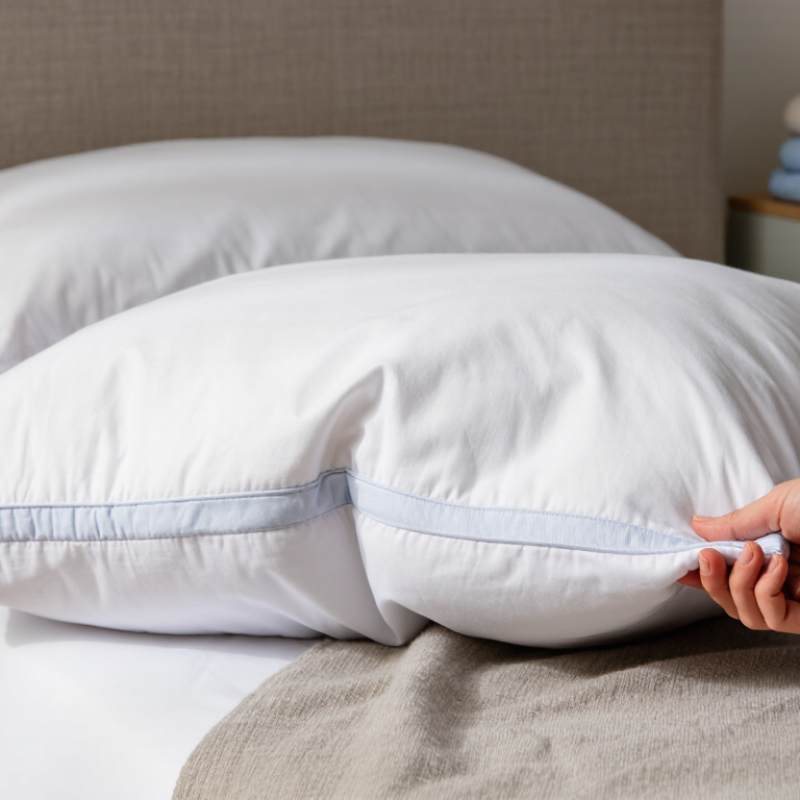
Identify Pillow Fill: ASTM D3574 Tests Foam Compression Set
A pillow that looks full in the morning may develop a permanent valley by winter. The first useful question is not, “Which pillow is best?” It is, “What is inside?” Foam, fiber, latex, and feather-like fills age differently. Read the product label, then inspect the core after removing the cover. Slow rebound and flattened edges often suggest foam fatigue, but appearance alone can mislead.
For foam pillows, ASTM D3574 includes compression set tests. These tests measure thickness loss after controlled compression and recovery. A laboratory compresses a specimen to a specified deflection. It then applies set time and temperature conditions before measuring recovery. The result appears as a percentage. Lower compression set usually indicates better shape retention. Not always. Density, cell structure, humidity, heat, and repeated loading also affect performance. The test does not identify every fill, and it cannot predict comfort perfectly.
Ask for the foam type and applicable test report before buying. Check specimen thickness, compression level, conditioning temperature, recovery time, and reported value. These details matter more than a vague durability claim. At home, rotate the pillow weekly and keep it away from direct heat. Let it breathe uncovered for several hours after use. Avoid folding it tightly during storage. I once treated a low test value as a guarantee. The pillow still softened sooner than expected. Real sleeping habits are messier than laboratory settings. Use test data as evidence, not a promise.
Fluff and Rotate Pillows Regularly to Limit Permanent Compression
Pillows often lose their shape because the same areas carry pressure every night. Fluffing them regularly helps redistribute the filling before compression becomes permanent. Hold each pillow by opposite corners, then gently pull and shake it for several seconds. Avoid beating it aggressively, which can damage delicate fibers. A quick morning fluff also removes some moisture trapped during sleep.
Rotate each pillow 180 degrees once or twice a week. If the design allows it, turn it over occasionally as well. This simple habit gives compressed areas time to recover. Use both hands to reshape the edges and support the center. Always check the care label before washing or drying, since excessive heat may weaken the filling or shrink the cover. Make sure the pillow is completely dry before using it again.
Tips: Fluff pillows when making the bed. Rotate them on a fixed weekday. Keep a simple reminder nearby. A breathable pillow protector can reduce sweat and dust buildup, but it cannot prevent compression completely. I used to fluff pillows only when they looked flat, and that was too late. Consistency matters more than force. Still, some pillows will gradually soften despite careful maintenance, so replacing them may eventually be the more supportive choice.
How to Stop Pillows from Losing Their Shape Over Time?
Regular fluffing and rotation help limit permanent compression. The chart shows a practical 30-day care schedule for common bed pillows.
Care tip: Fluff pillows daily or whenever they feel compressed, and rotate them weekly to distribute pressure more evenly. Always follow the pillow’s care label for washing and drying instructions.
Wash Pillows Twice a Year, Following American Cleaning Institute Guidance
Pillows lose shape when sweat, skin oils, moisture, and compressed filling collect inside them. I learned this after noticing a flat center and raised edges on my favorite pillow. Fluffing helped briefly. It did not solve the problem.
The American Cleaning Institute recommends washing pillows twice a year, unless the care label requires different treatment. This schedule creates a practical six-month cleaning checkpoint. Check the label before washing. Some pillows need a machine cycle, while others require spot cleaning only. Use a mild detergent and a gentle cycle. Avoid excessive soap. Residue can stiffen fibers and reduce loft.
Drying matters just as much. Run pillows through a low-heat cycle, then pause and reshape them by hand. Add clean dryer balls if the care instructions allow them. The filling should feel completely dry, not merely warm. Damp interiors can develop odors and clumps. That detail is easy to miss.
Do not overload the washer. Two pillows often balance the drum better than one. After drying, fold the pillow gently and release it. If it stays folded, the filling may already be permanently compressed. A protector can reduce washing stress, but it cannot replace the American Cleaning Institute’s twice-yearly cleaning guidance. I still inspect the care label each time, because my earlier routine was too confident and occasionally wrong.
Dry Pillows Thoroughly to Prevent Moisture-Related Clumping
How to Stop Pillows from Losing Their Shape Over Time?
Moisture is a quiet cause of flattened, lumpy pillows. When filling stays damp, fibers can stick together and lose their spring. I have learned this the annoying way. A pillow may feel dry outside while remaining wet near the center. Always check its care label before washing or drying it. Different fillings need different temperatures and handling. Gentle heat is usually safer than intense heat, which can damage fibers or shrink fabric. After drying, press several areas with your hand. Any cool, heavy, or musty spot needs more drying time.
Tips: Use a large dryer when permitted, so the pillow can move freely. Add clean dryer balls to encourage gentle separation. Pause every 20 minutes and rotate the pillow. Fluff it by hand between cycles. Do not store it until the center feels completely dry. Air-drying can work, but place the pillow in moving air and turn it often. Direct, strong sunlight may weaken some fabrics over time.
A useful habit is drying pillows immediately after washing. Delaying this step allows moisture to settle into the filling. I sometimes rush this process, and the result is uneven loft. That mistake is easy to repeat. After drying, leave the pillow in a dry room for several hours. Then inspect the corners, seams, and middle section. If clumps remain, gently pull them apart instead of squeezing the pillow aggressively. Regular airing also helps, although it cannot replace thorough drying after washing.
How to Stop Pillows from Losing Their Shape Over Time? - Dry Pillows Thoroughly to Prevent Moisture-Related Clumping
| Pillow Fill |
Drying Approach |
Practical Setup |
How to Check It Is Dry |
How This Helps Prevent Clumping |
| Down or feathers |
Tumble-dry only if the care label allows it; use low heat or an air setting. |
Dry one or two pillows at a time. Pause periodically to fluff and redistribute the fill. Dryer balls may help separate the filling. |
Feel the center and seams for coolness or dampness, and check for compacted areas. Continue drying in short intervals if needed. |
Gentle, even drying and regular fluffing help moisture escape from the dense filling and reduce wet clusters. |
| Polyester fiberfill |
Use a dryer only when permitted by the care label, typically on low heat or air fluff. |
Avoid overloading the dryer. Remove the pillow periodically, shake it, and reposition it for more even airflow. |
Check the middle, corners, and stitched edges; the pillow should feel dry throughout, not just on the surface. |
A fully dried, evenly distributed fill is less likely to stay compressed in damp clumps. |
| Memory foam |
Do not tumble-dry unless the care label specifically permits it. Many foam pillows should be air-dried. |
If the label allows washing, press out water gently without twisting. Place the pillow in a well-ventilated area and turn it periodically. |
Make sure the core is dry before putting on a cover or returning it to the bed; foam can retain moisture inside. |
Avoiding high heat and twisting helps protect foam from damage, while complete air-drying prevents trapped moisture. |
| Latex |
Follow the care label; latex pillows are commonly spot-cleaned and air-dried rather than machine-dried. |
Keep the pillow out of direct heat. Allow air to circulate around it and rotate it so both sides can dry. |
Check the surface and any damp spots before replacing the cover. |
Gentle care helps preserve the pillow’s structure and avoids trapping moisture under its cover. |
| Buckwheat hulls |
Do not wash or machine-dry the hulls unless the product instructions explicitly allow it. Dry the removable cover separately as directed. |
If the hulls become damp, follow the manufacturer’s care instructions and ensure they are completely dry before refilling the cover. |
Check that the hulls and inner cover are dry before reassembly. |
Keeping moisture away from the hulls helps prevent dampness from being enclosed inside the pillow. |
Always follow the pillow’s care label first. When in doubt, use a gentle air-drying method and make sure the entire pillow is dry before covering or using it.
Replace Worn Pillows Every 1–2 Years, per Sleep Foundation Guidance
How to Stop Pillows from Losing Their Shape Over Time?
Pillows rarely stay supportive forever. Even with careful cleaning, nightly pressure compresses the filling, weakens loft, and creates uneven lumps. Sleep Foundation guidance generally recommends replacing worn pillows every one to two years. This timeframe is not absolute. Foam, fiber, down, and latex can age differently, while heavier sleepers may notice sagging sooner.
Tips: Fluff your pillow each morning. Rotate it weekly. Use a washable, breathable protector beneath the pillowcase. Follow the care label, because excessive heat can damage filling and reduce resilience. Test the pillow monthly by folding it in half. If it stays folded, feels flat, or smells musty after washing, replacement may be sensible. Keep it dry.
I once assumed a clean pillow was a healthy pillow. That was a mistake. Cleanliness does not restore lost support. Try lying on your side and checking whether your neck stays level with your spine. Back sleepers usually need moderate height, while side sleepers often need more firmness. Stomach sleepers may prefer a thinner pillow. Your sleeping position can change, too. Persistent neck stiffness, morning headaches, or visible clumping are practical warning signs. A new pillow may feel unfamiliar at first, but continued discomfort deserves attention.
FAQS
Wash them about twice a year, unless the care label says otherwise. Think of a six-month checkpoint.
Some pillows tolerate gentle machine washing. Others need spot cleaning only. I once assumed every pillow could use the same cycle.
Use mild detergent and a gentle cycle. Avoid excess soap, because residue can stiffen the filling.
A pillow must feel fully dry inside, not merely warm. Damp filling may develop odors or clumps.
Two pillows often balance the drum better than one. Do not pack the washer tightly.
Fold it gently and release it. If it stays folded, feels flat, or shows lumps, support may be gone.
Consider replacement after one to two years, especially with sagging, musty smells, or permanent clumping.
No. Cleanliness cannot restore compressed filling. I learned that a fresh-smelling pillow can still cause discomfort.
Side sleepers often need more firmness. Back sleepers usually need moderate height, while stomach sleepers may prefer less height.
Morning headaches, neck stiffness, uneven filling, or a neck that bends away from the spine deserve attention. Pain is not a useful test.
Conclusion
To understand why do pillows lose shape over time, start with the filling. Foam gradually takes a permanent compression set, while other fills may flatten, shift, or clump with use. Foam compression-set testing, such as the method described in ASTM D3574, measures how well foam recovers after being compressed. At home, regular fluffing and rotating help distribute pressure and reduce lasting dents.
Wash pillows about twice a year when their care instructions allow, and dry them completely to prevent dampness from causing clumps or odors. Use a gentle cycle and avoid excessive heat unless the care label says otherwise. Even with good care, pillows wear down over time; replace them when they stay flat, lumpy, or uncomfortable, typically every one to two years. Checking their condition regularly can help you decide when support and shape have declined.
 DETT TexPro
